
A number such as 831 is not a complete technical specification or a reliable basis for comparing quotations. By the end, you will know which dimensions, absorbency results, food-contact documents, pack conditions and buying terms to request before placing an order in Hyderabad.
Key takeaways
- Ask what “831” identifies before comparing supplier quotations.
- Match pad dimensions to the tray and keep it beneath the product.
- Request food-contact declarations, batch records and absorbency test results.
- Compare landed price, minimum order, lead time and first-shipment controls.
What specifications should a Meat Pad 831 datasheet contain?
A complete datasheet must explain what “831” identifies: a model, size, absorbency grade, series or formulation. Do not compare quotations until the document gives the pad’s construction, dimensions, performance and storage limits.
Treat “meat pad specifications” as a measurable purchase record, not just a product code. Request these fields:
| Detail | What the datasheet must state | Why it matters |
|---|---|---|
| 831 identity | Model, size or absorbency code, with any suffixes | Prevents two different products sharing one number |
| Dimensions | Length, width and thickness in millimetres | Confirms tray fit and usable coverage |
| Weight | Net weight per pad, plus basis weight where relevant | Exposes material differences between similar sizes |
| Top sheet | Material and liquid-permeability description | Shows how purge enters the core |
| Absorbent core | Cellulose, SAP, or a stated combination; core weight | Indicates how absorption is achieved |
| Backing | Material, liquid resistance and seal compatibility | Reduces leakage into the tray |
| Capacity | Maximum absorption in millilitres or grams, with test liquid and method | Makes laboratory results comparable |
| Retention | Liquid retained after compression, stated in millilitres or grams | Reveals whether pressure forces purge back out |
| Pack quantity | Pads per inner pack, carton and pallet | Allows accurate order and delivered-cost comparisons |
| Storage limits | Temperature, humidity, shelf life, sunlight and moisture restrictions | Prevents degraded pads reaching production |
The datasheet should also state food-contact status, lot identification and the manufacturing date format. A capacity figure without its test method is not enough: free absorption in water can overstate performance against chilled meat purge and stacking pressure.
How do you choose the right pad size and position it in a meat pack?
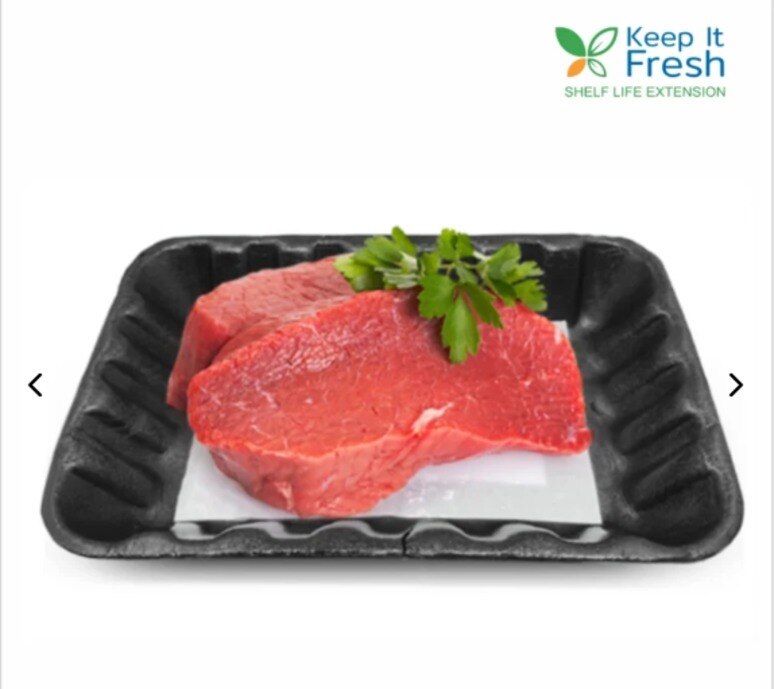
Choose the pad by usable footprint and expected purge, not meat weight alone. It must lie flat inside the tray, punnet, vacuum pouch or carton, with enough capacity for liquid released during the declared shelf life, transport vibration and stacking.
Before approving a size, check:
- Measure the internal length and width, then subtract the heat-seal flange and any corner radius. The pad must not touch the sealing path.
- Match absorbency to expected purge from the specific meat weight and cut. A heavier pack does not automatically need a larger pad, while a high-purge cut can saturate a small pad quickly.
- Keep the pad uncreased and fully supported. Do not fold, trim or overlap it unless the supplier has validated that configuration.
- Place the absorbent side toward the meat and the liquid-barrier backing toward the pack base, unless the datasheet specifies another orientation.
| Pack format | Sizing decision | Positioning check |
|---|---|---|
| Tray or punnet | Fit the usable base without covering the flange or raised sealing rim. | Centre it and keep every edge inside the seal boundary. |
| Vacuum pouch | Select a length that stays beneath the seal zone after evacuation. | Lay it flat under the product; folds can create leakage channels. |
| Carton | Cover the liquid-contact area without bunching at corners. | Prevent movement with the product or a validated liner arrangement. |
Test the finished pack after compression, tilting, vibration and refrigeration. Free absorption in a beaker can overstate performance because pressure can force retained purge back out. Include pad wastage and rejected seals when comparing delivered cost per usable pad.
How can you verify food-contact safety and real-world absorbency?
Do not approve a pad because a supplier calls it “food grade.” Ask for a declaration of compliance covering the finished pad, adhesive, ink, backing, absorbent core and additives, with the polymer, paper or nonwoven grade and intended contact conditions named.
Request these records from any meat pad supplier in Hyderabad:
- Current conformity records against India’s Food Safety and Standards (Packaging) Regulations, plus migration or food-contact test reports for the finished article.
- Batch or lot traceability linking the sample, production date, raw materials and replacement terms.
- A datasheet stating the test method, maximum absorption, retained liquid after compression and permitted chilled or frozen storage range.
- A sample lot identified with pad dimensions, construction and lot number; white, unprinted material is not automatically compliant.
Test the sample with the liquid and temperature your pack will face, not room-temperature water alone.
| Test | Record | Reject when |
|---|---|---|
| Saline solution | Absorbed and retained millilitres | Liquid escapes under normal loading |
| Meat exudate simulant | Uptake and spread at chilled temperature | Core gels, ruptures or leaves wet edges |
| Compression test | Retained liquid after tray or carton pressure | Purge returns during stacking |
| Leakage check | Seal-area and backing inspection | Liquid reaches the heat-seal flange |
| Chilled/frozen cycle | Performance after refrigeration and freezing exposure | Pad delaminates, hardens or loses retention |
Retain the signed declaration, reports and accepted sample with the purchase order. That evidence protects you when a shipment performs differently from the quotation.
What determines Meat Pad 831 price in Hyderabad?
A credible meat pad 831 price in hyderabad cannot be quoted from the model number alone. “831” may identify a supplier’s size, absorbency grade, series or formulation. Pad length and width, thickness or weight, absorbency and retained-liquid capacity, pack quantity, carton configuration, order volume and delivery terms all change the price.
To buy meat pad 831 in hyderabad, send suppliers one written specification and request the same quotation format:
1. Confirm pad length, width, thickness or basis weight, absorbency grade, test liquid, test time and retained capacity under pressure.
2. State the required quantity in pads and cartons, tray or pouch dimensions, and the maximum carton size you can store.
3. Request the price per pad and price per carton, with the number of pads in each carton clearly stated.
4. Ask for the minimum order quantity, sample charges, and whether the sample cost is credited against a later order.
5. Require GST to be shown separately, along with freight, delivery point and whether the price is ex-works or delivered in Hyderabad.
6. Record the confirmed lead time, stock location, lot availability and replacement terms for pads that fail inspection.
Elite Global Exim is one supplier you can ask for a written, specification-based quotation; compare its delivered cost with other offers rather than choosing the lowest carton price. Include freight, GST, rejected pads, storage and minimum-order inventory, because a cheaper pad with poor tray fit can cost more per usable pack.
Related product
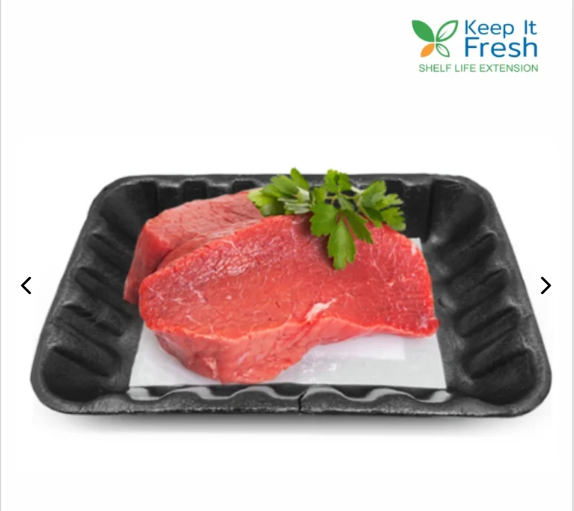 | SHELF LIFE EXTENSION SOLUTIONS Say goodbye to the mess and inefficiency of conventional absorbent materials with KIF Absorbent Gel Polymer (AGP) Pads, a cutting-edge solution... View product → |
How should you compare suppliers and approve the first shipment?
Approve the first shipment only after testing a representative sample lot and defining what makes one usable pad. For a meat pads supplier in Hyderabad, compare delivered cost per usable pad, not carton price.
Add freight, GST, storage, minimum-order inventory, dimensional wastage, rejected seals and pads that saturate before sale; a cheaper pad with poor tray fit can raise the cost of every saleable pack.
| Cost measure | Include | Why it matters |
|---|---|---|
| Quoted pad cost | Price per pad and per carton | Exposes packing-price differences |
| Delivered cost | Freight, GST, sample charges and storage | Shows the actual Hyderabad cost |
| Usable-pad cost | Rejected, saturated or misfitting pads | Links purchasing cost to saleable packs |
| Order commitment | MOQ, lead time and inventory holding | Prevents excess stock and expiry risk |
Record the following against the approved sample lot:
- Measure length, width, thickness and pack quantity; reject cartons with crushed packs, torn wrapping or moisture damage.
- Photograph the manufacturing date and lot number, then match both to the invoice and food-contact declaration.
- Seal pads in the intended tray or pouch, inspect the heat-seal flange, and check that the top sheet does not tear or release fibres or absorbent material.
- Wet the pad with the stated test liquid, handle and compress it, then check leakage, loose SAP or fibres and sealing-equipment contamination.
- Put replacement terms in writing for dimensional errors, failed seals, leakage, missing traceability or nonconforming absorbency.
Treat “eco-friendly” as an unproven claim until the supplier provides every layer’s material composition, disposal route, relevant test standard and evidence for compostability or biodegradability. SAP and multilayer construction do not automatically qualify for paper or plastic recycling.
Frequently asked questions
What should a Meat Pad 831 datasheet contain?
Request the meaning of “831,” pad dimensions, construction, absorbency capacity, liquid type tested, sealing compatibility, storage limits and batch identification.
How do you choose the right meat pad size and position?
Choose a pad that fits the tray without folding or extending beyond the seal area, then place it flat beneath the meat with its absorbent face correctly oriented.
How can you verify food-contact safety and absorbency?
Ask for the food-contact declaration, material information, batch traceability and a test report stating the liquid, test method, result and units. Test samples with the intended product and packaging line.
What determines Meat Pad 831 price in Hyderabad?
Price depends on pad dimensions, absorbency grade, materials, printing or lamination, order volume, packaging, freight, taxes, lead time and minimum order quantity.
How should you compare suppliers and approve the first shipment?
Compare identical specifications and delivered costs, inspect samples, confirm documents and seal performance, then approve the first shipment against agreed dimensions, absorbency, appearance and packaging criteria.