
A paper pad can fill a carton gap, stop a product from rubbing against the box, or support corrosion control—but those are different jobs. By the end, you will know which pad specification, packing method and companion materials fit your shipment, and what to ask a Hyderabad supplier before you buy.
Key takeaways
- Use pads to block movement and separate surfaces, not to assume drop cushioning.
- Match pad thickness, compression strength and size to the product and carton.
- Ask suppliers for material specifications, samples and consistent batch quality.
- Confirm whether treated pads provide qualified corrosion protection before using them on metal parts.
What kind of protection do paper smart pads provide?
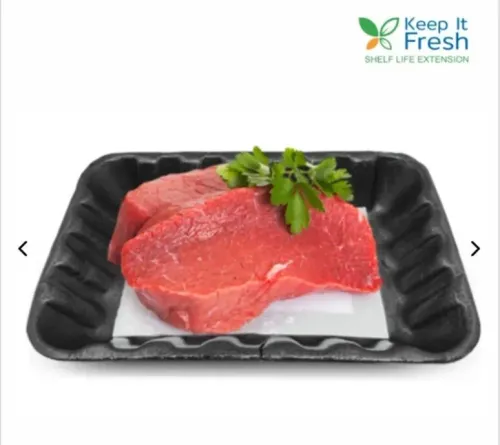
Ordinary paper pads provide mechanical protection: gap filling, blocking, separation, surface protection, movement control and limited impact absorption. A void-fill pad is not automatically cushioning; thin paper can stop contact without absorbing a drop. It also provides no corrosion protection unless it has been treated and qualified for that purpose.
| Protection type | What it does | What it does not do |
|---|---|---|
| Ordinary paper void-fill pad | Fills gaps, separates surfaces and restricts movement | Does not inhibit corrosion or guarantee shock absorption |
| VCI-treated paper smart pad | Adds corrosion protection while separating and stabilising clean metal parts | Does not replace cushioning, partitions, edge protection or blocking and bracing |
| Heavy or fragile-item support | Uses layered paper, corrugated board, molded pulp, honeycomb or foam to absorb impact | Cannot be specified from “void fill” alone |
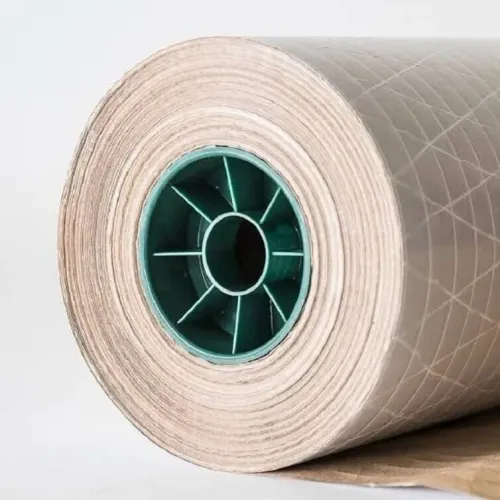
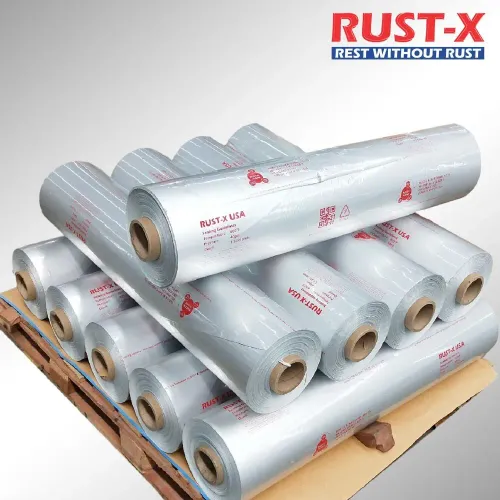
VCI paper releases inhibitor molecules inside a reasonably enclosed package. Those molecules form a protective layer on exposed steel, copper, brass or aluminium, but the metal must be clean and dry, the alloy must be compatible, and the enclosure must remain intact. Mixed-metal loads need compatibility confirmation rather than a generic VCI claim.
VCI paper does not remove water, replace desiccant or solve condensation. Salts, fingerprints and machining residues remain corrosion risks; use drying, desiccant, a moisture-barrier bag or humidity indicators when the exposure demands it. For paper smart pads for packaging, ask whether the product is ordinary paper void fill pads in Hyderabad or VCI material.
Check MIL-PRF-3420 by its current revision and exact material class, not by the words “VCI paper” alone.
How do you pack a product with paper pads?
Pack the product so it cannot move, but do not clamp it. Choose a corrugated carton with only the working clearance needed, and match its strength to the product’s weight and transport route.
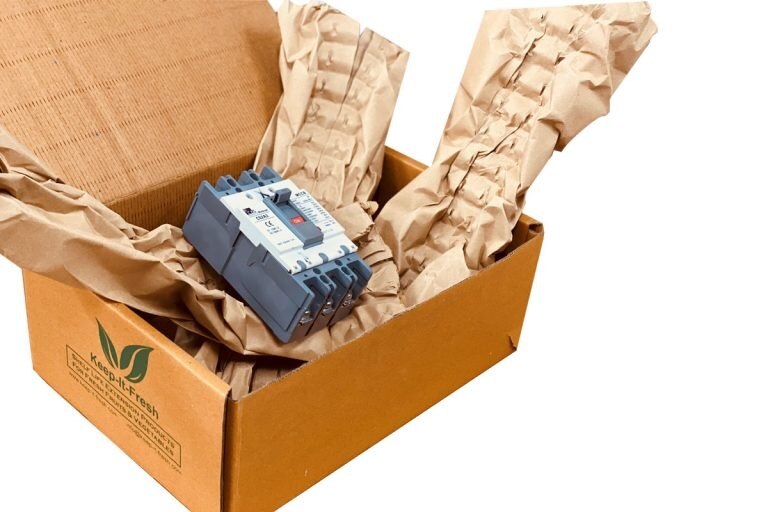
- Place a paper pad beneath the item. Wrap or fold sheets around exposed faces without covering delicate controls or creating pressure points.
- Crumple or dispense roll material into every open side gap, then add top restraint where the item could lift.
- Close the carton without blocking the flaps. Seal it with paper tape across every seam.
- Shake the sealed carton and reopen it if the product shifts, rattles or contacts a wall. Drop-test one representative packed sample before production packing.
| Format | Best fit |
|---|---|
| Hand-fed roll or perforated sheet | Low-volume packing with varied carton sizes |
| Dispensing machine | Repeated packing where uniform length, speed and pad density matter |
Estimate quantity by filling each open side until the product is immobilised without force. Large gaps, heavy parts and fragile glass need layered support, not one small pad.
Use honeycomb wrap for curved or scratch-prone surfaces, corrugated partitions between multiple items, edge protection at carton corners and blocking and bracing for dense components. Add an inner carton or molded support when glass, ceramics or heavy metal parts can transmit impact.
Eco friendly paper packaging pads suit separation and void filling, but paper smart pads for packaging are not automatically cushioning. Choose layered protection when drop impact exceeds the pad’s capacity, and verify the complete pack through testing rather than relying on the material name.
Which pad specification fits your shipment?
Match the pad to the load, gap and handling risk—not just the phrase “paper smart pads.” Request sheet or roll configuration, pad length and width, thickness, paper grammage, perforation pitch, roll width, pack quantity, lot identification and dispensing method.
| Shipment | Suitable specification |
|---|---|
| Glass and ceramics | Soft separation plus shaped or layered support; add edge protection |
| Electronics and cosmetics | Clean, non-abrasive separation; prevent movement and pressure on housings |
| Metal parts | VCI-treated grade only when corrosion control is required; confirm protected-metal compatibility |
| Tools and spare parts | Stronger blocking, partitions or layered pads for dense components |
Ask the supplier to state the maximum product-to-carton-wall gap the pad can fill, compression data, drop-impact results, vibration performance, puncture resistance and edge-protection data. A thin separator cannot replace blocking for a heavy part.
For VCI use, require loading guidance, package volume, storage duration, enclosure conditions and shelf-life evidence. Confirm the alloy or mixed-metal combination covered by the data; an open carton, contaminated surface or excessive moisture can defeat the intended protection.
Set pad quantity from metal surface area, carton volume, transport exposure and repeated opening—not item count. A request to buy paper smart pads should therefore specify placement and quantity per carton. Give a paper smart pads supplier in Hyderabad the product, carton and route details, then compare the delivered lot against that written specification.
How do paper pads compare with other protective materials?
Paper smart pads give controlled separation, gap filling and movement restraint, but their cushioning depends on construction and packing design. VCI-treated pads add corrosion protection; ordinary paper void fill does not. The phrase paper void fill pads in hyderabad does not, by itself, identify a cushioning grade or VCI treatment.
| Option | Protection | Storage | Disposal | Labour |
|---|---|---|---|---|
| Paper smart pads | Consistent blocking and separation; VCI grade protects compatible clean, dry metal | Moderate carton volume; rolls need a dispenser | Paper route depends on coatings, laminates, wax and contamination | Low to moderate |
| Shredded paper | Fills gaps but settles and protects unevenly | Bulky bags or bins | Usually straightforward if clean paper | High; hand placement takes time |
| Kraft-paper crumple | Accessible cushioning with inconsistent density | Bulky before use | Recyclability depends on contamination and coatings | High without dispensing equipment |
| Molded pulp | Strong shaped support for a known product | Needs the correct mould and storage space | Usually paper-based, subject to coatings and local collection | Low after moulding |
| Air pillows | Good light cushioning until punctured | Very compact before inflation | Plastic disposal route required | Needs inflation equipment and inspection |
| Bubble wrap | Effective cushioning and surface protection | Compact rolls | Uses plastic and needs a suitable collection route | Moderate |
| Foam | Strong shock, abrasion and edge control | Bulky; shaped foam needs dedicated storage | Disposal concerns rise with mixed or plastic foam | Low during packing, higher for waste handling |
Honeycomb wrap protects edges and irregular surfaces, while corrugated dividers create partitions and support heavy parts. They are useful companions, not automatic substitutes for a tested pad system.
Do not accept “recyclable” or “eco friendly paper packaging pads” as complete evidence. Check coatings, laminates, wax, oil contamination and the collection pathway serving your location. For fragile, heavy or high-value shipments, run representative drop, vibration and compression trials; a material name does not prove performance in the packed configuration.
What should you ask a Hyderabad supplier before ordering?
Ask a paper smart pads supplier in Hyderabad for a written specification tied to your shipment, not a generic product name. State:
- Product dimensions and weight, carton dimensions, maximum wall gap, metal type, package volume, storage duration, route and humidity exposure.
- Required pad placement, sheet or roll format, pad dimensions, grammage, thickness, perforation pattern and pack quantity.
- Dispensing method, compression or loading guidance, lot number, delivered-grade confirmation, packaging-integrity check and every promised certificate or test report.
| Compare | What to check | Reject when |
|---|---|---|
| Specification response | Every requested value is stated with units and tolerances | The supplier answers only “VCI paper” or “eco-friendly” |
| Sample consistency | Pad size, grammage, thickness, perforation and lot markings match the quotation | Samples vary or arrive damaged |
| Application guidance | Placement, package volume, storage duration, metal compatibility and loading quantity are explained | No guidance covers your carton and route |
For corrosion control, request compatibility data for steel, copper, brass, aluminium or mixed-metal assemblies, plus application instructions. Validate critical parts with corrosion testing or a representative storage trial; a paper specification alone cannot prove protection.
Combine pads with desiccant when moisture must be removed, a moisture-barrier bag for high-humidity or sea transit, humidity indicators for visibility, and controlled drying when parts or packaging enter wet. VCI paper does not remove water or cure condensation.
Use this comparison when evaluating Elite Global Exim or any supplier. A clear specification is the safest way to buy paper smart pads for a defined shipment.
Related products
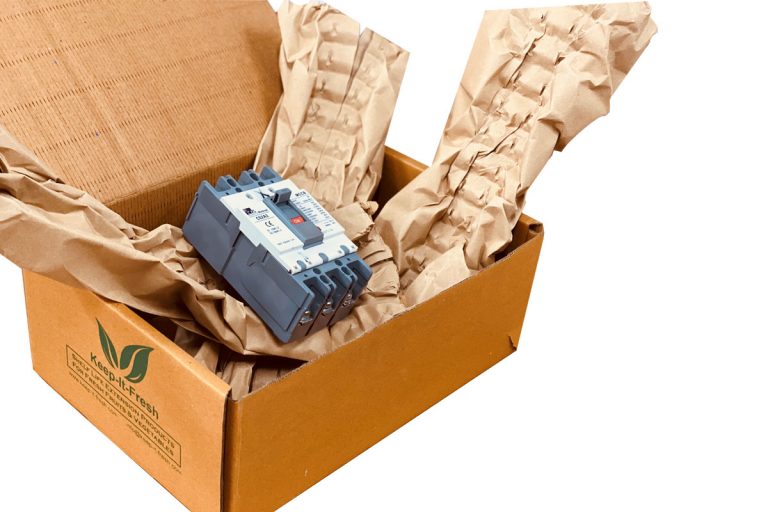 | PROTECTIVE PACKAGING Fillezy Smart Pads – Eco-Friendly Paper Pads for Secure Packaging Fillezy Smart Pads are advanced paper pads for packaging designed to protect... View product → |
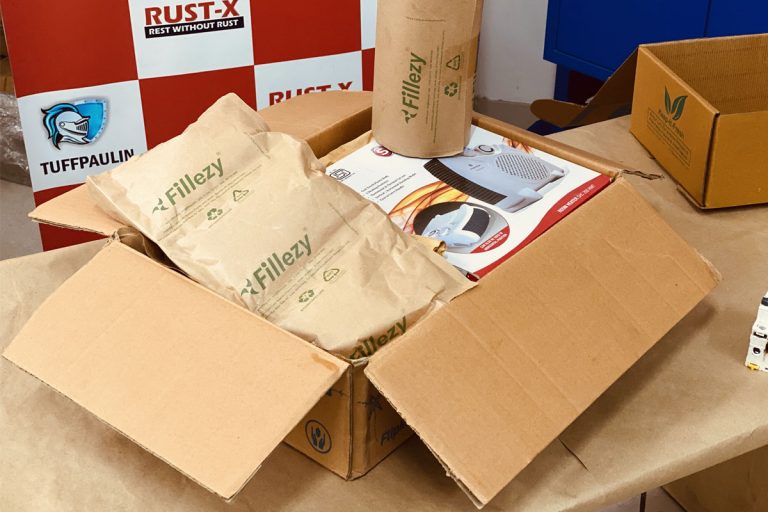 | PROTECTIVE PACKAGING Paper Air Packaging solutions like Fillezy Smart Pads offer maximum void fill while using significantly less paper, making them a cost-effective and... View product → |
Frequently asked questions
What kind of protection do paper smart pads provide?
Paper pads provide gap filling, blocking, separation, surface protection and movement control. They offer limited impact absorption, but a thin void-fill pad is not automatically cushioning. Untreated paper also provides no corrosion protection.
How do you pack a product with paper pads?
Clean and inspect the product, place pads between the product and carton walls, fill open gaps without over-compressing the paper, and prevent movement in every direction. Test the packed carton for shifting, abrasion and drop impact before regular shipments.
Which pad specification fits your shipment?
Compare pad thickness, sheet or folded dimensions, basis weight, compression performance, absorbency, cleanliness and required quantity. Select the specification after considering product weight, sharp edges, carton clearance, stacking load and transport conditions.
How do paper pads compare with other protective materials?
Paper pads suit separation, blocking and void filling where recyclability and easy handling matter. Foam can provide more consistent cushioning, corrugated inserts can provide stronger structure, and air cushions can reduce weight; compare protection, storage space, disposal and moisture performance.
What should you ask a Hyderabad supplier before ordering?
Ask for the pad material, thickness, dimensions, basis weight, compression data, moisture limits, packing quantity, sample approval process, lead time and batch controls. If you need corrosion protection, request the treatment name, compatibility evidence and qualification test results.