
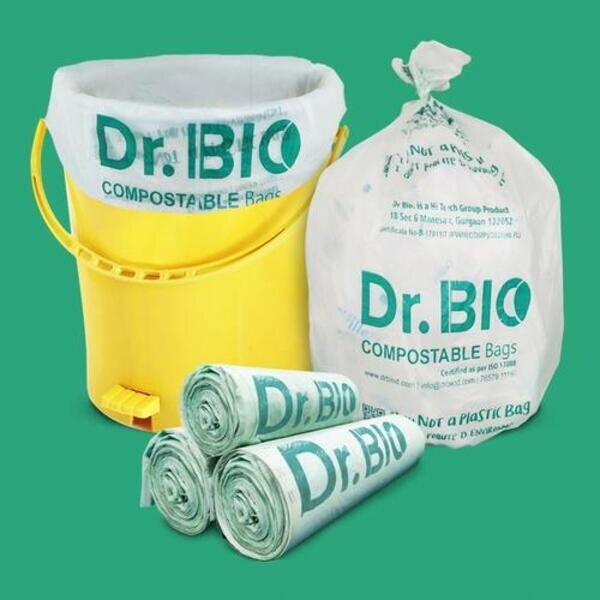
A bag labelled biodegradable is not automatically compostable, suitable for wet waste, or accepted by Kochi’s waste-collection system. By the end, you will be able to verify the disposal claim, specify the right size and strength, protect stock in humid conditions, and compare suppliers using usable cost rather than roll price.
Key takeaways
- Check whether the bag is biodegradable, compostable or additive-based.
- Measure your bin before choosing bag dimensions or roll labels.
- Match thickness, seams and closures to waste weight and moisture.
- Compare samples, documents and delivered usable cost before ordering.
Biodegradable, compostable or simply additive-based: what are you actually buying?
A “biodegradable” label does not tell you how fast a bag breaks down, where it breaks down, or what residue remains. Compare the material claim with the disposal route before ordering biodegradable garbage bags in Kochi.
| Option | What it means | Evidence and limitation |
|---|---|---|
| Conventional plastic | Ordinary polyethylene that persists after disposal | No compostability claim |
| Recycled polyethylene | Polyethylene containing recovered plastic | Recycled content evidence; it remains plastic after use |
| Oxo-degradable | Plastic containing an additive intended to cause fragmentation | Additive evidence is not proof of biodegradation or compostability |
| Biodegradable | A claim that microorganisms break down the material | Demand the test environment, time period and finished-bag report |
| Compostable | The bag disintegrates, biodegrades and avoids harmful compost effects under stated conditions | Require certification to IS/ISO 17088, EN 13432 or ASTM D6400 |
IS/ISO 17088 covers disintegration, ultimate aerobic biodegradation, effects on composting and compost ecotoxicity. A biodegradation test alone proves none of the other requirements. Industrial compostability is not home compostability, and landfill or incineration does not produce the same outcome as controlled composting.
Ask a compostable garbage bags supplier for:
- The finished-bag test report, CPCB certificate for compostable plastic products, certificate scope and validity, certification body, manufacturing-site details, and resin and additive declaration.
- Written confirmation that certification covers the quoted size, colour, formulation and manufacturing site.
- Confirmation from your waste contractor or composting facility covering accepted material, colour, labels and whether bags must be removed before processing.
Reject an additive-only claim unless the exact finished bag has evidence for the stated disposal route.
Choose bag dimensions by measured bin capacity, not by the roll label
Measure the bin, then choose the liner. Record its internal height, top circumference, or top width and depth. Add enough material to fold over the rim and close the bag; a tight liner reduces usable capacity and pulls against the seams.
A bag labelled 60 litres will not safely hold 60 litres if it must overhang the rim and close.
| Setting | Practical liner choice |
|---|---|
| Office or hotel room | Smaller liner for light, dry waste; allow rim overhang |
| Apartment | Size to the measured household bin, not the printed litre rating |
| Kitchen or restaurant | Larger gusseted bag with clearance for food waste and liquid |
| Wet market | Leak-resistant liner with extra height and room above the load |
| Industrial drum | Specify bag diameter and height against the drum, not litres alone |
Ask for flat width, gusset width, bag length, perforation spacing and roll-core diameter. These determine how many bags fit on a roll and whether the stated count is usable; a larger core or wider perforation spacing changes roll yield.
Put these details in the quotation:
- Filled dimensions and dimensional tolerances
- Film thickness in microns or mass per bag
- Pack quantity and closure style
Trial samples in the actual bins with the intended waste. Two bags marked with the same nominal capacity can have different usable capacity, and a roll that looks cheaper can deliver fewer serviceable liners. Include the expected fold-over, closure and transport load when comparing commercial garbage bags in Kochi.
Match thickness, seams and closures to the waste inside
A 30-micron bag can fail before a thinner-looking bag if its seam, corners or film formulation are weaker. Match the specification to the waste stream, then run a filled-bag trial through the intended collection and transport time; compostability testing does not prove resistance to puncture, seam rupture or liquid leakage.
- Wet food waste: test free-liquid retention against sharp bones, coconut shells and food containers. Check liner fit, gusset sealing and the bottom seam with representative wet waste, not dry laboratory contents.
- Glass and sharp packaging: prioritise puncture and tear resistance, and place the bag inside a rigid container where broken edges could cut the film.
- Sanitary waste: specify opacity, a secure closure and leak containment.
- Garden waste: allow for sticks, branches and uneven loads that concentrate force at corners.
- Heavy commercial waste: state the filled-weight limit and require a drop or transport trial.
Ask how the bottom seam is constructed, whether gussets are sealed continuously, and where the bag fails first. Inspect perforation quality on the roll as well.
| Closure | Staff action | Check before ordering |
|---|---|---|
| Drawstring | Pull and tie without lifting against the cord | Cord strength and secure closure |
| Tie handles | Tie handles, then lift the bag | Handle-to-film strength and usable length |
| Plain top | Knot or tie separately | Staff time, closure security and liquid retention |
State the waste stream separately in the purchase order, rather than requesting generic eco friendly waste bags in kochi. Choose by how staff actually close and lift the liner, and record failures during the full trial.
Protect compostable stock from Kochi heat, humidity and wet-waste contact
1. Before storing cartons, require the supplier to state the shelf-life, storage temperature and relative-humidity limits, original-packaging requirements, sunlight and heat-source precautions, first-in/first-out instructions, and batch or lot traceability. Do not infer shelf-life from “compostable” or “biodegradable,” or treat an air-conditioned office sample as evidence for bulk stock in a hot, humid warehouse.
2. Keep cartons sealed until use, on pallets or shelving off damp floors, and away from direct sunlight, boilers, vehicle exhaust and wash-down areas. Rotate by batch and inspect rolls for tackiness, brittleness, unusual odour, deformation and damaged perforations; these defects can cause sticking, tearing or failed perforations during collection.
3. Ask whether prolonged contact with wet waste reduces the stated holding time, and whether the supplier tested the bag through storage, collection and transport with comparable moisture and load. A fresh dry sample proves little if food liquid weakens the seam before the waste reaches the contractor.
4. Separate storage evidence from disposal instructions. An industrially compostable bag still needs an accepting composting facility; mixed waste sent to landfill or incineration may provide no composting benefit.
Before buying biodegradable garbage bags in Kochi in bulk, obtain written confirmation from the waste contractor or receiving facility about accepted material, colour, labels and whether bags must be removed before processing. Confirm that route before ordering.
Compare suppliers using documents, trials and delivered usable cost
Request these items in writing before comparing a biodegradable garbage bags supplier in Kochi:
- CPCB certificate number, validity date, certification scope, manufacturing site, and whether it covers the quoted size, colour and formulation; finished-bag test report; resin and additive declaration; and the standard used.
- Product dimensions, thickness tolerances, seam and closure specification, shelf-life statement, storage conditions, batch identification and disposal instructions.
- Pack quantity, minimum order quantity, delivery lead time, roll length, core size, perforation details and replacement terms for damaged or rejected bags.
Ask the waste contractor or receiving composting facility to confirm acceptance of the bag material, colour and labels, including whether staff must remove or open bags before processing. A Kochi supplier is suitable only when its documents match the quoted batch and your confirmed disposal route.
| Cost basis | What to include | Decision value |
|---|---|---|
| Per roll | Roll length, bag dimensions, core size and perforation quality | Lowest price can hide fewer usable bags |
| Per delivered usable bag | Rejects, gauge variation, transport damage and wet-waste failures | Best for routine purchasing |
| Per kilogram collected | Filled capacity, leak failures and handling losses | Best for kitchens and wet markets |
Require samples from the quoted batch. Test them in the real bins with the actual waste stream, collection time and lifting method.
Elite Global Exim can be one supplier put through this same evidence-and-trial process. Use the checklist unchanged when comparing a compostable garbage bags supplier with a conventional commercial garbage bags in Kochi vendor.
Related product
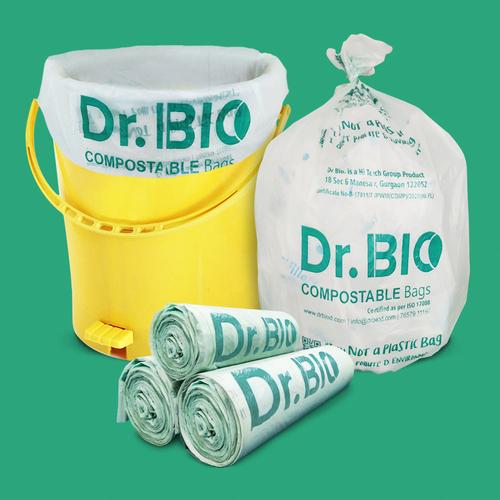 | Biodegradable Products Elite Global Exim – Garbage Bags Dealers is a reliable supplier of high-quality waste management and packaging solutions for residential, commercial,... View product → |
Frequently asked questions
What is the difference between biodegradable and compostable garbage bags?
Biodegradable bags break down through biological activity, but the label does not specify the time, location or residue. Compostable bags require a defined composting route and conditions; confirm the applicable standard and disposal facility before buying.
How do I choose the right garbage bag size for a commercial bin?
Measure the bin’s opening, height and circumference, then allow enough overhang for tying or sealing. Do not rely on a roll label such as 30 or 60 litres without checking the bag’s actual dimensions.
What bag specification suits wet commercial waste?
Choose thickness, seam strength and closure style according to the waste’s weight, moisture and sharp edges. Wet food waste requires leak resistance and secure seams; sharp or heavy waste needs a stronger bag or a different liner.
How should compostable garbage bags be stored in Kochi?
Keep stock sealed in its original packaging, away from direct sun, heat and high humidity. Separate bags from wet-waste contact until use, and rotate inventory so older rolls are used first.
How should I compare biodegradable garbage bag suppliers in Kochi?
Request material and certification documents, sample rolls, actual dimensions, thickness and batch details. Test bags with your waste stream, then compare delivered cost per usable bag rather than price per roll.