
A paper pad protects a shipment only when its function, placement and performance match the product and the delivery route. By the end, you will know how to load pads inside a carton, compare them with other protective materials, test the finished pack and specify what to ask from a local supplier.
Key takeaways
- Match the pad to impact, void filling, surface separation, corner protection or load bracing.
- Place pads to stop the product travelling inside the carton during handling.
- Compare construction, dimensions and density before approving a paper pad format.
- Test the complete pack for drops, vibration, compression and Kochi humidity.
Match the pad’s job to the product and the hazard
“Paper smart pad” is not a universal technical category. Ask what the pad must do: cushion impact, fill empty space, separate surfaces, protect corners, or block and brace the product so it cannot shift.
| Construction | Main job | Suitable use |
|---|---|---|
| Flat separator | Prevents rubbing and distributes contact | Stacked glass, painted parts and metal components |
| Formed honeycomb pad | Absorbs energy through its cellular structure | Boxed glass, small appliances and heavier fragile goods |
| Accordion-style cushioning pad | Compresses and recovers under shock and vibration | Electronics and products needing a fitted buffer |
| Corner protector | Shields projecting edges from impact | Cartons with exposed corners or fragile frames |
| Blocking and bracing pad | Holds the product in a fixed position | Heavy items that could travel inside the carton |
| Void-fill pad | Occupies empty space and limits movement | Regularly shaped products with modest impact risk |
Eco friendly void fill pads mainly stop movement into empty space; they do not automatically absorb the shock and vibration of parcel transport. Use fitted paper pads for packaging when the item needs cushioning, not merely restraint.
Boxed glass and small appliances need impact and corner control; electronics need cushioning without abrasion or static-related risk. Add controls for sharp edges, liquids, precision parts, compression-sensitive goods and moisture-sensitive products. Ordinary paper is not VCI corrosion protection.
For metal components or chemicals, test compatibility against the actual oil, solvent, acid or alkaline formulation, including leakage, staining, softening and contamination over the intended storage period.
Load paper pads inside the carton so the product cannot travel
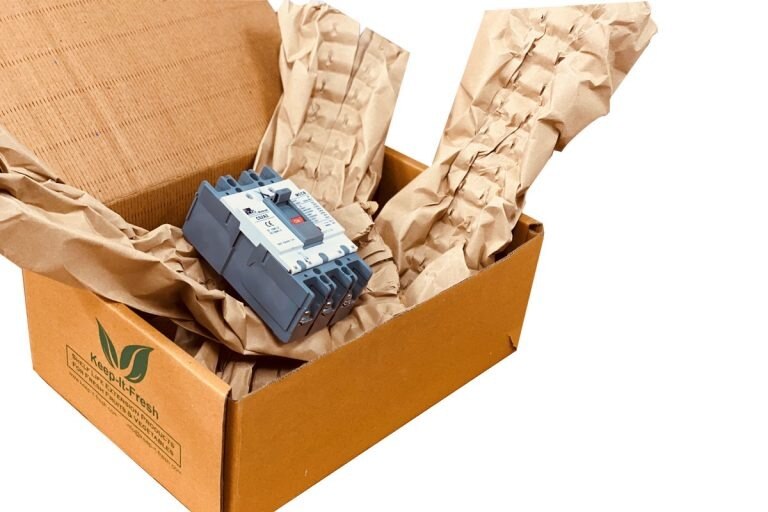
Keep the product from touching carton walls by building a fitted paper barrier around it. Paper pads for packaging work as blocking and bracing only when they resist movement; loosely dropped material leaves gaps and provides weak paper packaging protection.
1. Place a firm base layer across the carton floor. Use enough pad thickness to support the product without bottoming out under its weight.
2. Centre the product on that base, leaving an even gap on every side. Keep it away from carton walls unless the design intentionally uses edge protection against them.
3. Measure the four side gaps and fit pads tightly into each one. Compress the pieces consistently so they hold the product without crushing its surface.
4. Add separate pieces around projecting corners, handles or other protrusions. Do not trap a sharp edge directly against paper; add a folded or formed guard first.
5. Choose the layer count for the product’s weight, carton dimensions, expected drop height and shipping distance. A heavy item, oversized carton, higher drop or longer route calls for more robust blocking and additional cushioning, not simply more loose fill.
6. Place a top layer over the product before closing the flaps. It must complete the restraint system; it cannot compensate for open side gaps.
Close the carton and check that the flaps meet without force, the product does not rattle when the sealed carton is shaken in several orientations, and no pad has shifted. Stop if overfilling bows the carton, marks the product or prevents proper closure.
Compare pad construction, size and density before choosing a format
A thicker, denser pad is the safer starting point for heavier goods, longer routes and repeated vibration; a thin separator is for interlayer protection, not impact absorption. Specify pad dimensions, thickness, paper grade or basis weight, density, formed structure, compression requirement, moisture resistance and intended product weight before comparing quotations.
- Choose flat separators for stacked surfaces, formed pads or accordion structures for cushioning, and fitted inserts when the product must stay oriented.
- Check compression or crush performance under the product’s actual load. A pad that collapses in the carton has stopped protecting it.
- Use paper pads for packaging only after confirming moisture resistance for warehouse humidity, rain exposure and condensation.
| Format | Main advantage | Main trade-off |
|---|---|---|
| Fitted paper or corrugated insert | Controls orientation and creates blocking | Needs accurate dimensions |
| Loose-fill paper or crumpled kraft | Adapts to irregular voids | Can settle and leave gaps |
| Honeycomb paper wrap | Protects exposed surfaces | Adds wrapping time |
| Air pillows or bubble wrap | Lightweight cushioning | Plastic recovery and humidity behaviour differ |
| Molded pulp insert | Holds a shaped product firmly | Bulkier; cushioning retention differs under humidity |
Heavier goods need resilient formed construction rather than thin eco friendly void fill pads, which mainly stop movement into empty space. Check whether laminates, wax, foil, oil contamination or difficult-to-remove adhesives prevent recovery in the local paper stream; “paper” does not automatically mean recyclable.
Test the complete pack for drops, vibration, compression and Kochi humidity
Approve the pack only after testing the carton, closure, product, pads and pallet pattern as one system. Paper packaging protection that passes a bench check can still fail when stacking, vibration and Kochi humidity act together.
1. Close the carton without forcing the flaps or compressing the contents. Apply the intended tape, glue or strapping, then place a load on the carton to confirm compression does not mark, deform or shift the product.
2. Shake the sealed carton through several orientations. Open it and inspect product movement, crushed pads, exposed gaps, broken closures and contact with carton walls.
3. Perform controlled drops from the handling heights relevant to the route. Record each height, face, edge and corner impact, then inspect the product and pads. Select ISTA 3A for parcel shipments up to 70 kg; use ASTM D4169 for distribution-cycle evaluation. Match the protocol to the channel, not to a “shockproof” claim.
4. Test stacking and vibration with the intended pallet pattern, carton count and dwell time. Condition samples at the expected high relative humidity before testing, because monsoon storage can reduce paper stiffness, compression strength and stacking performance.
5. Keep paper smart pads in Kochi off floors and exterior walls on covered racks or pallets. Protect stock from rain and condensation, rotate it, and inspect incoming lots for thickness, grammage, crush condition, odour, contamination and lot traceability. Reject stock with moisture damage before it enters production.
Turn “paper smart pads” into a measurable Kochi purchasing specification
A search phrase is not a buying specification: “paper smart pads supplier in kochi” covers void fill, cushioning, separation and bracing products. Write the requirement so two quotations can be compared line by line.
- Construction, paper grade or grammage, dimensions, thickness and pad count per carton
- Intended product weight, cushioning or compression target, and moisture condition at dispatch
- Storage limits, lot identification and the agreed distribution test, such as ISTA 3A or ASTM D4169
- Whether the pad is designed for void fill, cushioning, separation or bracing
- Samples packed around your actual product, not a generic demonstration item
Define acceptance checks for dimensions, thickness, grammage, crush condition, odour, contamination, visible delamination and lot traceability. Specify the sampling quantity instead of accepting visual inspection alone.
For food-contact packaging, request evidence that the paper or board is food grade under the FSSAI Packaging Regulations, 2018. Ask what controls apply to recycled fibre, printing inks, adhesives and migration into the food.
For industrial parts, test the actual oil, solvent, acid or alkaline formulation against the pad, including a leakage scenario and intended shelf life. Ordinary paper is not VCI corrosion protection.
A buyer comparing paper smart pads in kochi can question Elite Global Exim against these fields, rather than choosing on “eco friendly” or “paper” alone.
Related products
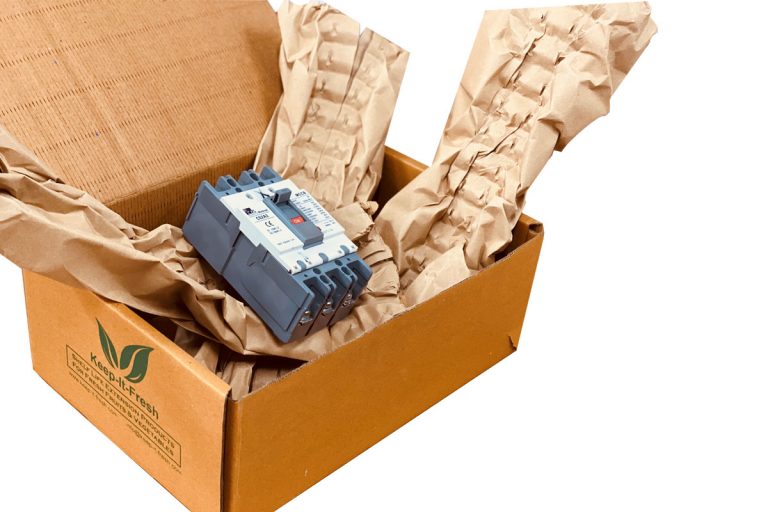 | PROTECTIVE PACKAGING Fillezy Smart Pads – Eco-Friendly Paper Pads for Secure Packaging Fillezy Smart Pads are advanced paper pads for packaging designed to protect... View product → |
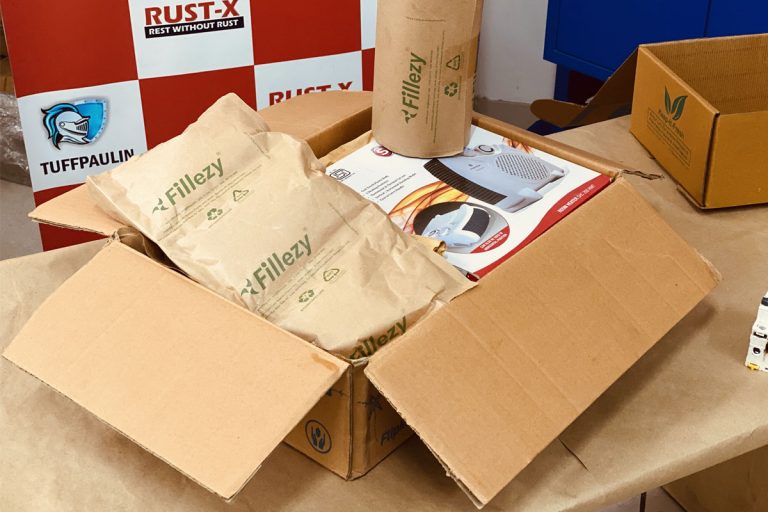 | PROTECTIVE PACKAGING Paper Air Packaging solutions like Fillezy Smart Pads offer maximum void fill while using significantly less paper, making them a cost-effective and... View product → |
Frequently asked questions
What job should a paper smart pad perform?
Define whether the pad must cushion impact, fill empty space, separate surfaces, protect corners, or block and brace the product.
How should you load paper pads inside a carton?
Position pads around the product so it cannot travel, contact carton walls directly, or move into unprotected corners.
What should you compare when choosing paper pads for packaging?
Compare the pad’s construction, dimensions and density against the product weight, carton geometry and handling hazards.
How do you test paper packaging protection in Kochi?
Test the complete packed carton for drops, vibration, compression and humidity exposure before approving the specification.